Your home’s heating system is one of its hardest-working components and when something goes wrong, the question hits fast: is this worth fixing, or has the system run its course? Many Long Island homeowners face this dilemma every winter, often unsure whether to call for boiler repair or start planning for something new.
The answer depends on a few key factors — age, repair history, and efficiency. Early detection of symptoms allows you to take action to prevent continued unnecessary costs for making temporary repairs or having to replace a unit that still has some life in it. Knowing where your system stands can save you hundreds, sometimes thousands, of dollars.
The Real Cost of Delaying Boiler Repair
Putting off a needed fix almost always makes things worse. A minor pressure issue left unattended can turn into a cracked heat exchanger. A small leak can corrode surrounding components over a few months. When your boiler starts showing early warning signs — banging or kettling sounds, uneven heat across rooms, water pooling near the unit, or a pilot light that keeps going out — those are signals that professional boiler repair is needed now, not later.
As per the global market insights report, the residential boiler market is projected to reach $165.5 billion by 2035, driven largely by homeowners replacing aging, inefficient systems. A useful benchmark is the “5,000 rule” — multiply your boiler’s age (in years) by the repair cost. If that figure exceeds $5,000, replacement is usually the smarter financial move.
Signs It’s Time for Heating Repair vs. Full Replacement
Not every problem signals the end of your boiler’s life. Scheduling timely heating repair for isolated faults — a faulty thermostat, a failed circulator pump, or a worn pressure relief valve — can add several productive years to a system that’s otherwise in good shape.
Repair makes sense when:
- The boiler is under 10–12 years old
- Repair costs fall below 30–40% of a new unit’s price
- The system has been well-maintained and runs efficiently
Replacement is the smarter call when:
- The unit is 15+ years old and repair costs keep climbing
- Your energy bills have increased noticeably without a change in usage
- The system struggles to maintain consistent heat
- Parts are hard to source or no longer manufactured
- You’re dealing with rust, corrosion, or persistent leaks
At Euro Comfort Zone, licensed technicians give homeowners a straight answer — no upselling, no guesswork. Every diagnostic includes a clear breakdown of repair vs. replacement costs so you can make an informed decision.
What Heating System Replacement Actually Involves
A full heating system replacement sounds daunting, but in the hands of a skilled team it’s a clean, well-organized process. Modern high-efficiency boilers carry AFUE ratings of 90% or higher, compared to the 60–70% typical of units from the 1990s and early 2000s — a gap that directly translates to lower monthly utility bills.
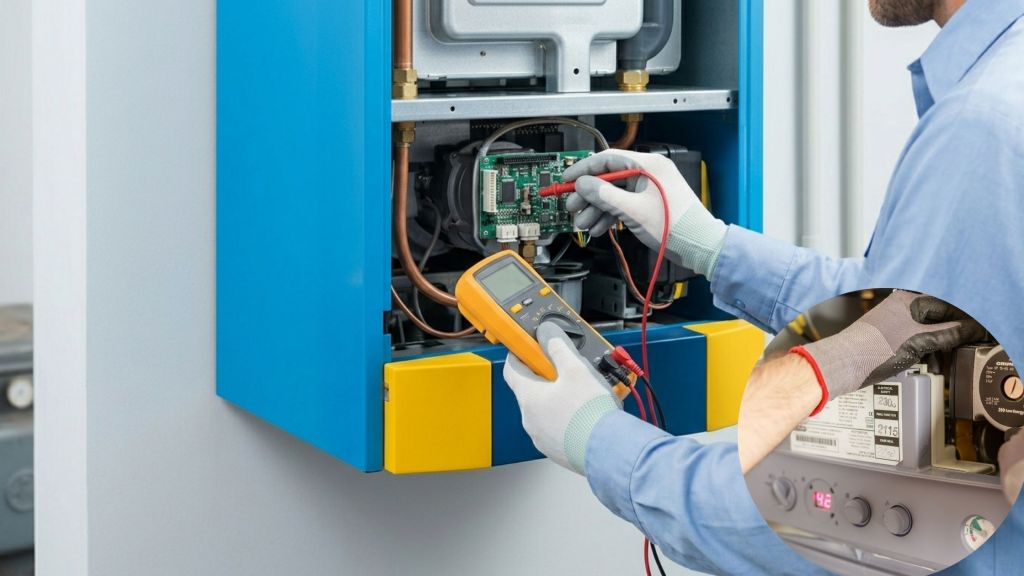
During a heating system replacement or new boiler installation, a trained technician will:
- Assess your home’s square footage, insulation, and existing radiator or baseboard setup
- Recommend the right unit size to avoid short cycling
- Handle all venting, piping, and gas or fuel connections
- Test the system thoroughly before leaving
Euro Comfort Zone handles the full process — from the initial consultation to the final walkthrough — so nothing falls through the cracks. If you’re also weighing alternative heating options, our guide on Heat Pump Repair vs Installation: What’s Best for Your Home? breaks down how heat pumps compare and when they make sense as a replacement path.
How to Extend the Life of Your Current Boiler
If your unit is still within a reasonable service window, a few consistent habits can delay the need for full replacement. Annual professional tune-ups are the single most effective step — a technician cleans the burners, checks for corrosion, tests pressure levels, and catches small issues before they turn into a costly boiler repair call. Bleeding your radiators once a year and checking the pressure gauge monthly also make a real difference. A well-maintained system lasts longer and runs more efficiently, keeping fuel costs lower throughout the heating season.
What to Expect From a Boiler Repair and Replacement Evaluation
Before making any decision, a licensed HVAC professional thorough evaluation will provide you with the clearest picture of the situation. Whether you’re looking at a targeted heating repair or a full system overhaul, a quality assessment covers more than just the unit itself. The technician should inspect the flue and venting, check for carbon monoxide risks, evaluate the radiators or baseboard heaters, and review how the system is zoned. At Euro Comfort Zone, every evaluation includes a written summary of findings with honest, side-by-side cost comparisons — so no one makes a major financial decision based on guesswork. Facing the same repair-or-replace dilemma with your cooling system? Our guide on AC Repair vs AC Replacement: Which One Should You Choose? walks through the same decision framework for air conditioning.
Key Takeaways
- Schedule heating repair promptly when warning signs appear — delays lead to bigger, costlier problems.
- You can rely on the 5,000 rule: if the age multiplied by the repair cost is more than $5,000, getting a new unit is the usual decision.
- If your boiler is 15 years or older and you find yourself constantly calling for repairs, these are excellent reasons to consider a replacement.
- Refreshing your boiler to a high-efficiency model can lead to substantial reductions in your fuel bills, as these new boilers use much less fuel compared to the ones that have been installed for many years.
- It is a wise idea to seek a professional opinion on heating repair and boiler installation before you decide on either of them.
- Consult a licensed contractor for heating system repair and replacement of the heating system to guarantee your safety and adherence to the rules.
Conclusion
Knowing when to schedule a boiler repair and when to invest in a full replacement is one of the most valuable decisions a homeowner can make. Acting on early warning signs — rather than waiting for a total breakdown — protects your comfort, your budget, and your home’s long-term value.
It may be that your unit requires just a repair or possibly a new system in this case, a good installer is your best friend. Getting a professional assessment, obtaining a clear cost plan, and having the work guaranteed can really ease the problem from a nightmare to simply a change.
Your Home Deserves Reliable Heat — Let’s Make That Happen.
Euro Comfort Zone provides same-day service, upfront pricing, and written guarantees for Long Island homeowners. Schedule your free consultation today and get the honest answers your heating system deserves.
Frequently Asked Questions
1. How long does a boiler typically last?
Most residential boilers last 15 to 20 years with regular maintenance. Units serviced annually tend to reach the upper end of that range.
2. How do I know if my boiler needs repair or full replacement?
The age and the price of the repair are the two main factors. If your device is less than 12 years old and the problem is a simple one, usually it is worth repairing. However, if the system is old and repair bills keep coming, then replacement may be the most economical option as you may recover the cost of the new system through energy savings within a few years.
3. What causes a boiler to lose pressure?
Some typical reasons are a tiny leak in the water, a broken pressure relief valve, or after bleeding radiators, not re-pressurizing them. A qualified engineer can pinpoint the problem and fix it in no time.
4. Is a high-efficiency boiler worth the upfront cost?
In most instances, the answer is affirmative. For instance, a boiler with an AFUE of 95% versus one of 70% will result in considerable savings on heating bills every month and in most cases will compensate for the price difference within 5–8 years.
5. How much time is needed to install a boiler?
A residential boiler installation of a standard nature will generally be finished within a day. The replacement-like installations that involve new venting or piping may take a little longer.